Last summer, I wrote about the values I discovered in cleaning our old cottage attic with my son-in-law Sebastian (“Letting Go, Making Gains”). In the time since then, the idea of giving up some control and working more collaboratively has become my theme for the year, and I’ve shifted my approach to my work—from doing nearly all of it myself to asking several others to work with me. As a result I’ve been thinking more and more about teamwork.
First, teamwork isn’t simple, and there are plenty of speed bumps you can hit when you share the load. Challenges are inevitable in a whole range of areas such as clear and timely communications, meeting standards, matching up expectations, managing cash flow, and taking on responsibility for others. But the benefits are multiple—and the financial one often isn’t the primary one. How about being a better partner to my clients, reducing my own stress, and creating output far greater than I could do alone?
Even greater benefits can show up within the collaborative work itself, as we each contribute our unique skills and viewpoints. When we truly work as teammates, we back each other up physically, mentally, and empathetically. This is something that’s been proven to me repeatedly in my other team environment—sailing.
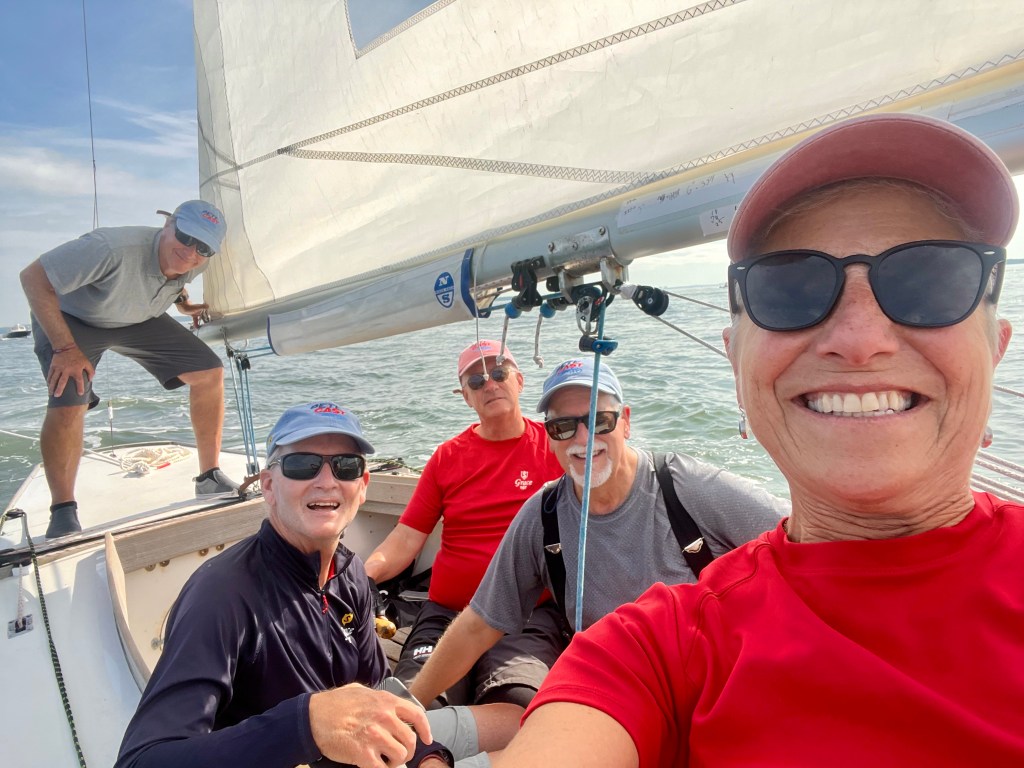
Over the course of last season, I engaged with three different sailing teams, where physical and mental back-up is the air we breathe—as in any team exercise. The first team, our International One-Design crew, traveled to Norway and earned a podium finish on the racecourse. We’ve all sailed together—some of us for decades—but in this instance we also anticipated and enjoyed a unique road trip together. We shared the sightseeing, the AirBnB shopping, cooking and cleaning, and simply having fun together even as we also supported each other in being well prepared to race effectively.
In the second, on a newly formed Ida Lewis Yacht Club team, we immersed ourselves in the sailboat racing format known as team racing, practicing several times from June to August. As a “grandmaster” team, we were all north of age 50 (most were 60-plus) and often a bit creaky and slow to absorb the next lesson. Yet by consistently encouraging each other, keeping a sense of humor, and relying on polite, respectful communications, we created strong new bonds. Our final results didn’t deliver any trophies, but we had fun and reached a modest level of competence we can build on next year.
In the third, with our Shields Class team that’s sailed together for 24 seasons, we carefully prepared to travel with boat and gear to the National Championship in Larchmont, N.Y. and kept an upbeat attitude despite some poor race finishes in the weeks before the event. When we crossed the starting line for the big regatta, we were relaxed and ready, and found we were truly sailing “in the zone.” Every crew member found a way to raise their game—and that of their teammates—to the point that we sailed seven straight races without a significant mistake and clinched the title before the final race.
In all cases, step one was gathering a team of people who reliably show up and focus on what matters to the team as a whole, apply their skills, and try to get better. But an absolute key to our teams this year that I hadn’t quite put my finger on before is that team members also remained curious about each other as individuals and made a point of enjoying and deepening their relationships, thereby creating room for a level of connection that built trust and the desire to perform well for each other. This is especially valuable during an event that lasts multiple days, allowing us to gain strength as a team while some rival crews lost energy.
Now imagine these are the kind of teammates you’re working with in your business every week, all year ‘round. Understanding each other’s tasks and thought processes provides better communication and makes it easier to help each other to keep the wheels of the enterprise turning smoothly. But understanding what makes the other tick as a person and considering what they may be feeling in the moment builds a supportive team that’s likely to outperform and outlast other teams. Even when not finishing first—or perhaps even when there’s no scorekeeping involved—these teams are improving. What do you think?
Have a great month!
 John S. Burnham